Case study
How Industrial Automation Solutions Are Driving Productivity in NZ Manufacturing
Apr
New Zealand’s manufacturing sector faces growing pressure from rising labour costs, skills shortages, and the need for consistent, competitive output. As a result, many manufacturers are re-evaluating their production lines to reduce inefficiencies and improve performance.
Industrial automation is becoming a key solution. Across sectors like food, beverage, logistics, and cosmetics, NZ manufacturers are adopting automation, robotics, and warehouse systems to boost efficiency, reduce errors, and build more resilient operations.
This guide explores how automation is transforming manufacturing in NZ, the technologies driving results, and what to consider when implementing these solutions.
Why Industrial Automation NZ Is Growing So Quickly
The conversation around industrial automation in NZ has shifted significantly in recent years. What was once seen as a capital investment suited only to large multinationals is now increasingly accessible to mid-sized and even smaller manufacturers thanks to advances in technology, more flexible financing options, and the availability of scalable systems that can grow alongside a business.
Several factors are driving this growth:
-
Labour market pressure: Finding and retaining skilled workers on the production floor has become increasingly difficult. Automation reduces dependence on manual labour for repetitive, physically demanding, or time-sensitive tasks.
-
Consistency and quality control: Automated systems perform the same task the same way every time, reducing the variability and errors that come with manual handling.
-
Speed and throughput: Robotic systems and automated production lines can operate at speeds that are simply not achievable manually, particularly at end of line automation stages such as packing, palletising, and despatch.
-
Cost competitiveness: NZ manufacturers exporting product need to compete on cost with producers in markets where labour is cheaper. Automation helps level that playing field.
-
Health and safety: Removing workers from repetitive strain tasks, heavy lifting, and hazardous environments reduces injury risk and associated costs.
Key Areas Where Automation Engineering Services Are Making a Difference
Production Line Automation NZ
Production line automation covers a broad range of applications, from automated feeding and sorting at the start of a line through to inspection, labelling, and packing at the end. For NZ manufacturers, including those investing in logistics automation, the most common entry points into production line automation are:
-
Automated filling and portioning for food and beverage producers
-
Robotic pick and place systems for sorting, assembling, or transferring products between stages
-
High speed packaging automation for wrapping, sealing, or bagging products at volumes that exceed manual capability
-
Vision systems and quality inspection for detecting defects, verifying labels, or checking fill levels automatically
Each of these applications reduces reliance on manual intervention at key stages, improving both speed and consistency across the line.
End of Line Automation
End of line automation is one of the highest-impact areas for most manufacturing facilities. This is the stage where finished product is packed into cases, cases are loaded onto pallets, and pallets are wrapped and staged for despatch. It is also one of the most labour-intensive and physically demanding parts of the operation.
Technologies commonly used in end of line automation include:
-
Automated box packing systems that erect cartons, load product, and seal boxes without manual intervention
-
Robotic carton packing systems that use robotic arms to pick and place products into cases at high speed and with consistent accuracy
-
Case packing robots that handle a wide variety of product formats and pack patterns
-
Robotic packaging machines that integrate into existing lines with minimal disruption
-
Automatic case erectors NZ that form and open cartons ready for packing, eliminating a repetitive and time-consuming manual task
The cumulative effect of automating end of line processes is significant. Labour requirements at this stage of the line can be reduced substantially, throughput increases, and the risk of packaging errors or damaged product drops considerably.
Robotic Palletising Solutions
Once product is packed, it needs to be palletised. Manual palletising is one of the most physically demanding tasks in any warehouse or production environment and is a major contributor to workplace injury. Robotic palletising solutions address this directly.
Options available to NZ manufacturers include:
-
Robotic palletiser New Zealand installations for high-volume, continuous operation environments
-
Collaborative palletising robots that work safely alongside human operators without the need for full safety guarding, making them suitable for smaller facilities or mixed environments
-
Automated palletising systems NZ that handle multiple SKUs and pallet patterns with programmable flexibility
-
Palletising system NZ lease options that allow manufacturers to access robotic palletising technology without the full upfront capital outlay
Lease palletising robot systems have become a popular route for smaller manufacturers who want the productivity benefits of automation without committing to a large capital purchase. This model has opened up robotic palletising to a much wider range of businesses across New Zealand.
Warehouse Automation Systems
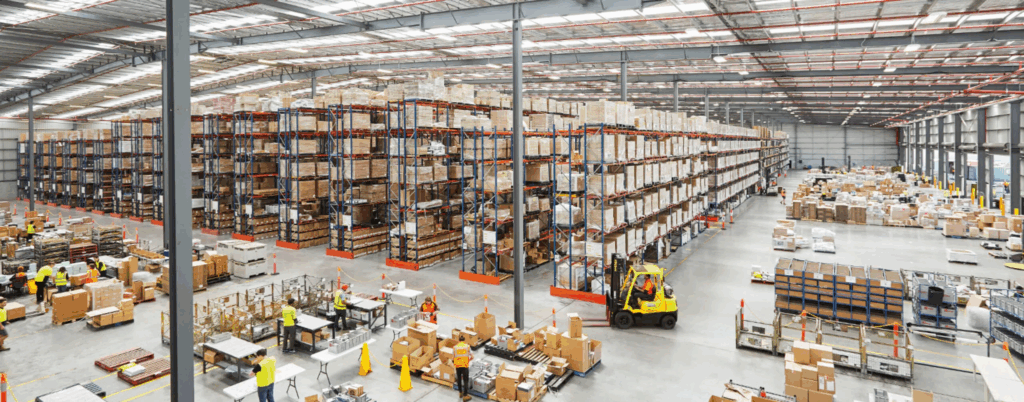
Beyond the production line itself, warehouse automation is delivering major efficiency gains for NZ manufacturers and logistics operators. Automated warehouse solutions reduce the time and labour involved in moving, storing, locating, and despatching product, while also improving stock accuracy and order fulfilment speed.
Key warehouse automation technologies include:
-
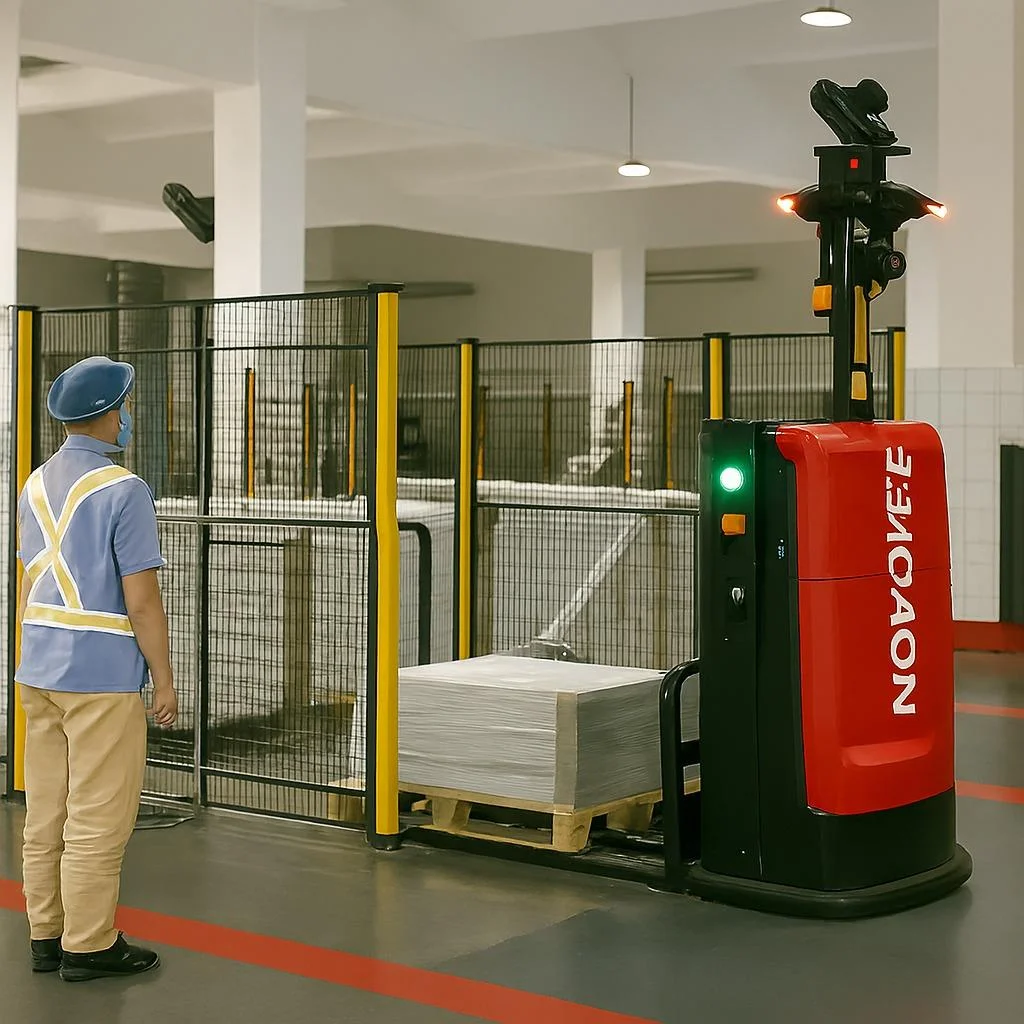
Industrial AGV solutions NZ: Automated guided vehicles that move materials, pallets, or trolleys around a facility without human operators. AGV systems NZ are particularly effective in large warehouses, cold storage environments, and facilities with high volumes of repetitive internal transport.
-
Cold storage AGV automation: AGVs designed for low-temperature environments where human operators face discomfort and health risks. Cold storage forklift automation and autonomous forklifts for cold storage are increasingly common in NZ food and beverage facilities.
-
Automated material handling NZ: Systems that move product through a facility automatically, from production through to despatch, using conveyors, lifts, and robotic transfer systems.
-
Pallet automation systems: Automated solutions for pallet movement, storage, and retrieval that reduce forklift traffic and improve warehouse safety.
-
Robotic palletising warehouse installations that integrate palletising directly into the warehouse flow rather than as a standalone end-of-line function.
Automated Parcel Dimensioning and Sortation
For logistics operators and manufacturers handling outbound despatch, automated parcel dimensioning and sortation systems are delivering significant efficiency improvements. These systems capture the dimensions, weight, and barcode data of parcels automatically as they move along a conveyor, eliminating the need for manual measurement and data entry.
Technologies in this area include:
-
Conveyor dimensioning system NZ: In-line systems that capture DWS data at conveyor speed
-
Parcel sortation system NZ: Automated routing of parcels to the correct despatch lane, vehicle, or storage location
-
Automated DWS solution NZ: Dimension, weight, and scan systems that integrate with warehouse management systems for real-time data capture
-
Warehouse management system integration NZ: Connecting automation hardware with existing WMS platforms to ensure data flows accurately across the operation
These systems reduce errors, speed up despatch, and provide accurate billing data for freight based on actual dimensions and weights.
Automation by Industry: Where NZ Manufacturers Are Investing
| Industry | Common Automation Applications | Key Benefit |
|---|---|---|
| Food manufacturing | Robotic case packing food, end of line automation food industry, automated palletising | Labour reduction, hygiene, throughput |
| Beverage | Beverage packaging automation, palletising system NZ, case erectors | Speed, consistency, reduced breakages |
| Cosmetics | Cosmetic packaging automation, robotic packaging for cosmetics, low cost cosmetic packaging automation lease | Flexibility, gentle product handling, scalability |
| Logistics and warehousing | Warehouse automation NZ, AGV system NZ, parcel sortation, DWS | Accuracy, speed, reduced manual handling |
| General manufacturing | Production line automation NZ, robotic pick and place, control systems integration NZ | Consistency, quality, reduced downtime |
| Cold chain | Cold storage AGV automation, autonomous forklift cold storage, automated palletising | Worker safety, continuous operation |
Custom Automation Systems NZ: Why One Size Does Not Fit All
One key point for NZ manufacturers is that off-the-shelf automation solutions do not always suit real production environments. Every facility has unique layouts, product types, and throughput needs.
This is where custom automation systems and specialist engineering services add value. An experienced automation provider can design tailored solutions that integrate with existing equipment, avoiding the need for major facility changes.
Industrial automation engineering in this context involves:
-
Site assessment and process mapping to understand current workflows and identify automation opportunities
-
System design and engineering to develop a solution matched to the specific requirements of the facility
-
Control systems integration NZ to connect automated equipment with existing PLCs, SCADA systems, and management software
-
Installation, commissioning, and testing to ensure the system performs as expected in real operating conditions
-
Ongoing support and maintenance to keep systems running reliably over the long term
Working with an established automation solution company that has genuine engineering capability, rather than simply a reseller of standard equipment, tends to produce better outcomes for manufacturers with complex or non-standard requirements.
Understanding the ROI of Industrial Automation Solutions
Plant managers and finance teams evaluating automation investments naturally want to understand the return on investment. While the specifics vary by application, facility, and scale, the key drivers of ROI from industrial automation solutions typically include:
-
Labour cost reduction: Fewer operators required on repetitive tasks frees headcount for higher-value work or reduces overall payroll costs
-
Increased throughput: Automated systems run faster and more consistently than manual operations, increasing output per shift
-
Reduced waste and rework: Automation reduces errors in packing, filling, and palletising, cutting product waste and the cost of rework
-
Lower injury costs: Removing workers from high-risk manual tasks reduces workplace injury rates and associated costs including ACC claims, lost time, and retraining
-
Improved stock accuracy: Warehouse automation reduces picking and packing errors, improving customer satisfaction and reducing returns
-
Extended operating hours: Automated systems can run overnight or across weekends with minimal supervision, increasing effective production capacity without additional headcount
Automation investments often pay back within two to four years, with ongoing savings over time. Lease options can reduce upfront costs and improve affordability. You can also visit our local office to explore tailored automation solutions.
Practical Tips for NZ Manufacturers Considering Automation
Before committing to any automation investment, it is worth taking a structured approach to the evaluation process:
-
Map your current process in detail before approaching any supplier, so you can clearly articulate your volumes, product formats, pain points, and priorities
-
Identify your highest-impact opportunity rather than trying to automate everything at once. End of line automation or palletising is often the best starting point for facilities new to automation.
-
Consider total cost of ownership, not just the purchase price. Maintenance, spare parts, software support, and integration costs all contribute to the real cost of a system.
-
Ask about integration capability with your existing equipment and management systems, particularly if you are running a warehouse management system that you want connected to automation hardware.
-
Explore financing and lease options to understand whether a lease or rental model makes sense for your business rather than a straight capital purchase.
-
Talk to other NZ manufacturers who have implemented similar systems. Real-world experience from peers in your sector is often more useful than supplier case studies alone.
Conclusion
Industrial automation is no longer optional for NZ manufacturers it is essential for staying competitive. From production efficiency to warehouse optimisation, it delivers clear gains in productivity, consistency, and cost control.
By focusing on high-impact areas and working with experienced providers, manufacturers can build more resilient and scalable operations. Automation is not just a technology upgrade, but a long-term strategy for growth. Contact us or visit our office to explore automation solutions tailored to your business.
Frequently Asked Questions
It automates final production stages like packing and palletising. It reduces labour, improves safety, and increases efficiency and consistency.
A cobot palletiser works safely alongside humans without full guarding. It’s ideal for smaller spaces, offering flexibility with lower throughput.
Yes. Leasing options are available for systems like palletising robots, reducing upfront costs and making automation more accessible.
An AGV is a driverless vehicle that moves goods automatically. It’s used to transport pallets, manage stock flow, and reduce reliance on forklifts.
It connects automated equipment with control systems like PLCs and software, ensuring smooth communication, data flow, and centralised monitoring.
Industries like food, beverage, cosmetics, logistics, and cold chain benefit most due to high volume and repetitive processes.